Why you
Yes, you
You’re the expert on your life
Commissions need renters, parents, young people, elders, artists and small business owners. Lived experience is the qualification.
It’s advisory, and it matters
Most commissions recommend to a council. Good recommendations, backed by neighbors, become real decisions.
You won’t go it alone
Apply with a Lobby friend. Prep for interviews together. Debrief after meetings together.
Why commissions matter
Commissions do the groundwork
Councils and boards often react to what commissions bring them. Commissioners do the research, listen to the community and shape the options before anything reaches a vote.
Planning commissions
Study land use, zoning and long-range plans, hold hearings and send recommendations up. Much of what a council votes on about housing starts here.
Arts and culture commissions
In Tacoma, the Arts Commission funds artists and organizations, runs Tacoma Arts Month and oversees public art.
Human rights and community commissions
Tacoma’s Human Rights Commission studies, investigates and mediates community issues tied to discrimination.
Parks, transportation, climate and more
They gather data, listen to residents and draft recommendations that land on the council’s agenda.
Case study · 2026
The Pierce County Charter Review Commission
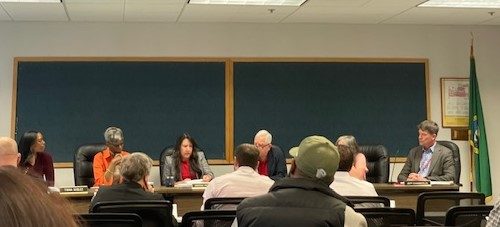
The county charter is its constitution. Every ten years, voters elect 21 neighbors, three from each council district, to review it. The 2026 commission spent six months on that work, meeting Monday nights in public, taking comment and debating proposals from residents and commissioners alike.
Six months of evenings is a big ask. It mattered because this is how a county’s rules get rewritten by the people who live under them, not only by those already in power.
Read about the 2026 Charter Review ↗57
amendment proposals reviewed
20
considered for the ballot
7
sent to voters in November 2026
3
more sent to the County Council
Since 1987, 32 of the 51 charter amendments placed on the ballot came from charter review commissions.
Democratize the room
Agreements and principles come first
The commission should agree on what it believes before it agrees on what it will do. That’s how a room becomes one where everyone can actually take part.
Too many rooms reward the same few people.
Top-down systems tend to hear whoever has power, money, connections or the biggest voice. Over time, rooms get stratified: the same people speak, the same ideas win, and everyone else stops coming.
Getting a seat isn’t enough. We have to change how the room works.
Agreements set how we treat each other
Shared agreements, read aloud and voted on, give everyone the same rules for speaking, listening and disagreeing. Nobody has to be the loudest to be heard.
Principles set what we’re aiming for
When ideas compete for limited time and money, principles give a common test: which idea best serves what we said we value, not whose idea it is.
Small practices, big shifts
Silent writing before discussion. “How might we?” before “no.” A first step before “yes.” An empty chair for who isn’t in the room. Decisions made in the open.
They outlast any one person
Leaders change. Agreements and principles keep a body anchored to the community and make room to learn, try and fix things.
How to start
From curious to commissioner
-
1
Find a seat that fits
Pick something you care about: arts, parks, libraries, housing, transportation. See open seats in the Tacoma area →
-
2
Go to one meeting first
Sit in the audience. Get a feel for the room. Bring a friend.
-
3
Write it like a neighbor
Most applications ask why you want to serve. Tell the story of why this matters to you and who you’d bring with you.
-
4
Bring the empty chair
Once you’re seated, keep asking: who isn’t in this room? Then go invite them.
Questions to carry in
Bring these to your first meeting
Checklists
Before you apply and once you’re in
Before you apply
- Attend one meeting of the commission
- Read its purpose and recent minutes
- Talk to a current or past commissioner
- Find a Lobby buddy to apply with
- Draft your “why I want to serve”
Your first 90 days
- Complete any required trainings (Tacoma requires Open Public Meetings Act and Public Records Act training within 90 days)
- Propose or adopt shared agreements
- Learn the budget and who staffs you
- Ask who isn’t in the room
- Report back to your neighbors
Want a seat buddy?
Tell us what you’re interested in and we’ll connect you with someone who’s done it.